
Autumn 2026
Convened by SMA trustees Dr James Donaldson and Dr Rajan Lal
All colloquia are held on Zoom at 6.00-8.00pm GMT/BST, accessible through the link https://iu.zoom.us/j/9166804343
Abstracts can be found in the section on each talk below and will be updated where necessary. Please always check back here for any short-notice zoom link changes as we may need to update before events.
Wednesday 7th October, 6:00pm BST:
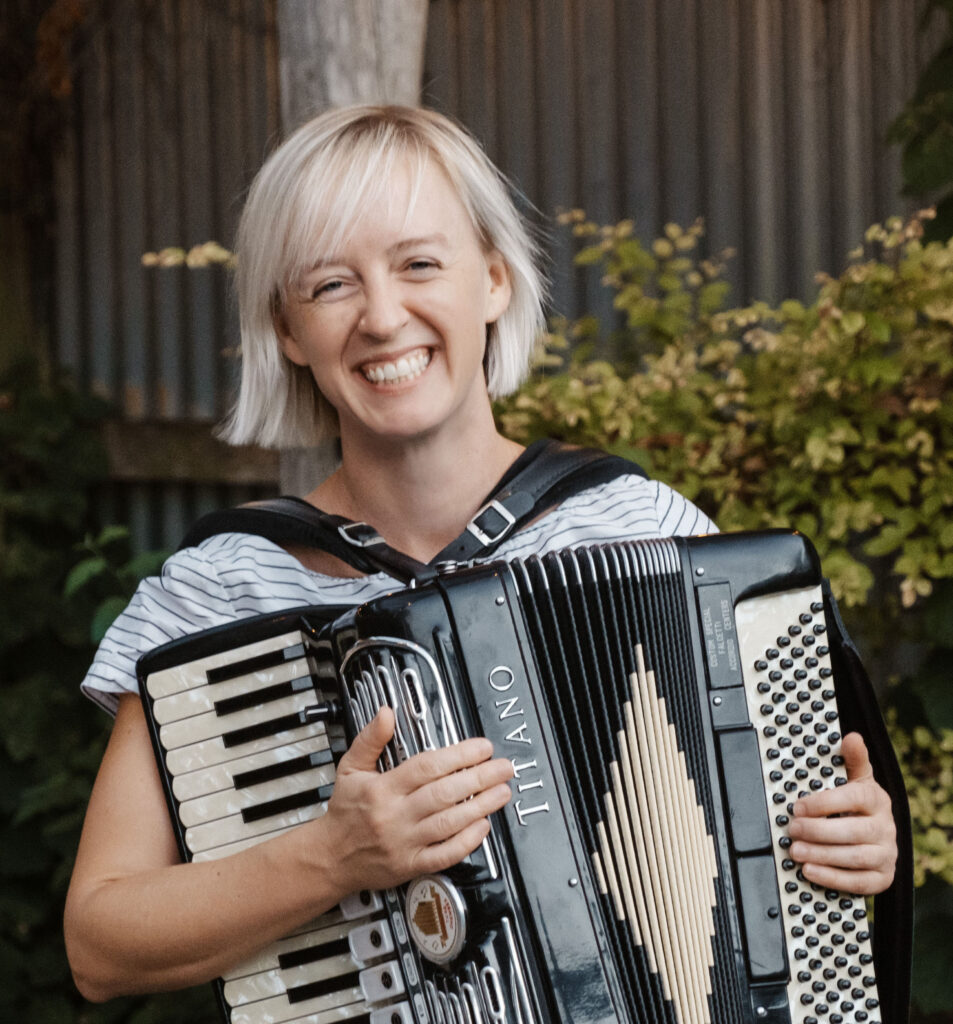
Chelsea Burns, ‘Neither National Nor Universal: Rethinking Place in Musical Modernisms’
Abstract: The idea of musical nationalism has often been taken for granted as a celebratory representation of a country’s people and sounds, heard not only on concert stages but also at large-scale events like World’s Fairs and Olympic Games. But this sense of the term does not inhere to all music that has been characterized as nationalist. Particularly for composers from marginalized places, nationalism has often been the only marketable mode of expression. In the 1920s and 1930s, musicians like Heitor Villa-Lobos (Brazil) and Carlos Chávez (Mexico) found that exotic representations of their home country could garner them space on international concert stages, while cosmopolitan works (referred to in both Mexico and Brazil as “universal music”) were neither welcomed nor well received abroad. And this challenge is not limited to the past; to the contrary, many composers face similar expectations today.
In this talk, I address limitations encountered by Mexican and Brazilian composers in the 1920s and 1930s, and the strategies they used to navigate the transcontinental musical scene of the period. As I discuss here, these composers and many others have been characterized as essentially and indelibly connected to exotic places, a characterization that not only shapes their compositional output but also has guided scholars’ and critics’ discussions. I argue that nationalist frames have limited the ways that scholars understand and analyze the political and cultural work of this music, and I propose alternative modes for studying these compositions in a rich and nuanced way.
CHELSEA BURNS is Associate Professor of music theory at the Butler School of Music, and affiliate faculty at the Lozano Long Institute for Latin American Studies, both at the University of Texas at Austin. Her research interests include Latin American modernist concert music as well as vernacular music genres, especially country and bluegrass. She is particularly interested in the ways that contexts—economic, political, material—affect analytical interpretation. Her research suggests that such contextual understanding shapes analysis in critical ways, at times undermining or reversing prevailing musical interpretations. Her work touches on issues of race, postcoloniality, instrumental technologies, and expressions of privilege and class, among others.
Professor Burns has presented papers at national conferences of the Society for Music Theory, the American Musicological Society, the Society for American Music, the Society for Ethnomusicology, the US chapter of the International Association for the Study of Popular Music, and the Latin American Studies Association. In 2023, she received the Society for Music Theory’s Outstanding Publication Award for an article addressing exoticism in Heitor Villa-Lobos’s musical depictions of indigeneity. Her book, The Exotic Self: Mexican and Brazilian Modernists Abroad and at Home, was published in autumn 2025 by Oxford University Press. Additional publications address the pedal steel guitar in 1960s country music, genre and race in 1970s country, the iconic status of Nudie Cohn’s so-called “nudie suits” in country, and Taylor Swift’s re-recorded albums (Taylor’s Versions). She is also an avid bluegrass player and bicycle rider, and serves the Austin community as a board member of the Central Texas Bluegrass Association and Austin’s Bicycle Advisory Council.
Wednesday 18th November, 6:00pm GMT.
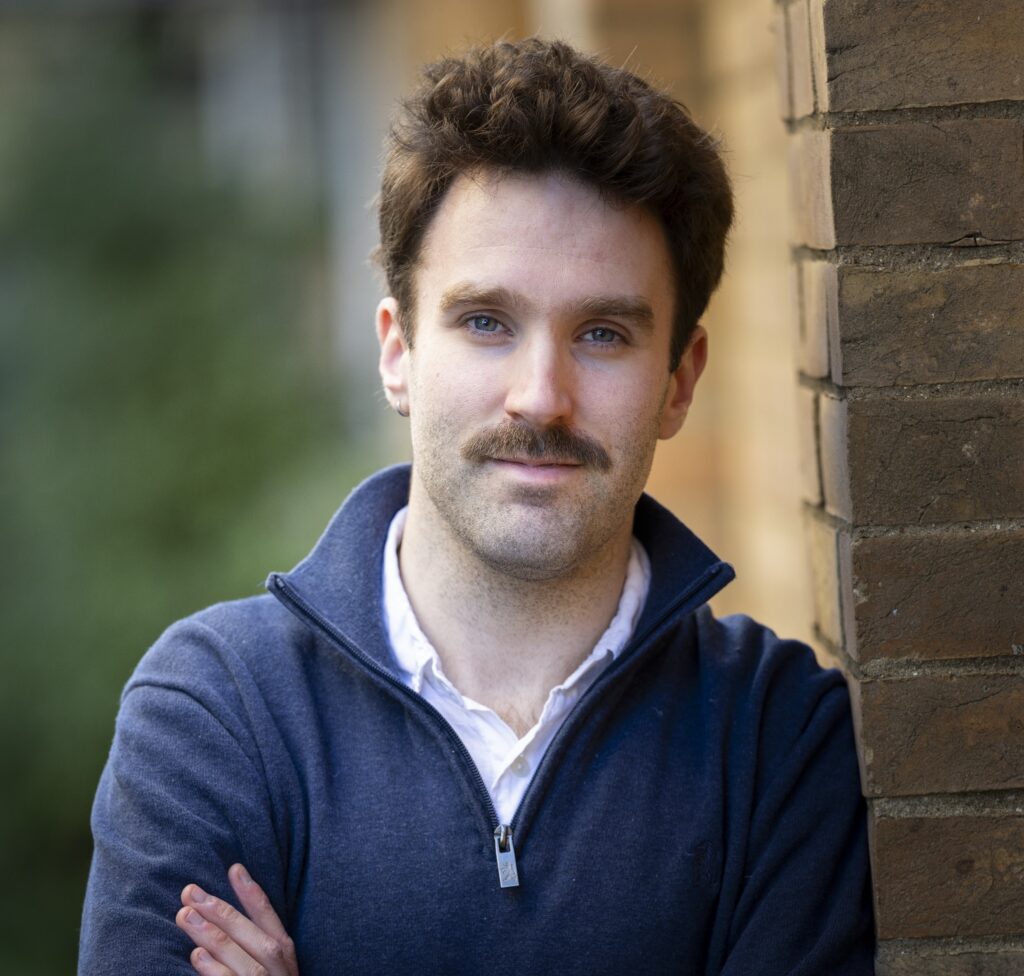
Joseph Mason, ‘Articulating structure in Old French song’
Abstract: Existing theories of musical structure often describe musical sections using multiple criteria, such as the way that a section might be repeated, what its tonal functions are, and the connotations of a melody’s gestures or topics. By contrast, existing studies of medieval vernacular monophony have rarely discussed musical structure in any terms other than repetition. The songs of the troubadours and trouvères, poet-composers in southern and northern France from 1100 to 1300, are generally described either as having pedes-cum-cauda structure (ABABX, which occurs in the majority of songs) or simply being through-composed.
This paper seeks to move beyond current repetition-based definitions of melodic structure in troubadour and trouvère song by examining how tonal and gestural aspects of a melody could articulate structure, in particular the structure of the cauda (X in ABABX form): because the cauda can vary in length, this paper focuses on the beginning of the cauda (usually line 5) and its end. As Switten (1985) notes, the start of the cauda may recall material from the pedes or may be a departure; the end of the cauda may function as a ‘kind of coda’. The paper will determine the musical features that contribute to a sense of ‘beginning’ or ‘ending’ in these melodic sections before presenting some analyses of songs that show how Old French composers played with the expectations of formal function in certain songs.
JOSEPH W. MASON is an Assistant Professor in Early Music at the University of Cambridge. His research centres on song in thirteenth-century France, combining cultural history and music analysis. Joseph’s current monograph project examines the intersections of music and violence in thirteenth-century France. Joseph has published a number of journal articles on Old French song and in 2024 received the Roland Jackson Award at the American Musicological Society for an article of exceptional merit in the field of music analysis.
Previous Colloquiums
2026 Spring season
Convened by SMA trustees Dr James Donaldson and Dr Rajan Lal
26th March 2026: Laura Tunbridge (University of Oxford)
But what about the music? Negotiating the sonic and the social in a history of the string quartet
5th February 2026: Ellen Bakulina (McGill University)
Essential expositional and essential structural closure in Rachmaninoff’s piano concerti
2025 Season
Convened by SMA trustees Dr James Donaldson and Dr Rajan Lal
19th November 2025: Sam Reenan (University of Cincinnati, College-Conservatory of Music)
Symphonic Spectacles: Form, Identity, and Hybridity in the Early Twentieth Century
23rd October 2025: Inessa Bazayev, Daniel Elphick, Cecilia Oinas, Christopher Segall
Perspectives on Alfred Schnittke’s String Quartet No. 3
3rd April 2025: René Rusch (University of Michigan)
Schubert’s Enharmonicism Revisited
27th February 2025: Johanna Frymoyer (University of Notre Dame)
Modernist Movements: Listening for Topics in Schoenberg and Stravinsky (A Book Talk)
6th February 2025: Peter Asimov (University of Cambridge)
Mode de valeurs at 75: a meta-analysis and a new direction
2023-24 Season
Convened by SMA trustee Dr Oliver Chandler
2 November 2023: Jonathan De Souza (University of Western Ontario)
‘Musical Texture, Ensemble Coordination, and Social Network Analysis’
6 December 2023: Jason Yust (Boston University)
‘Periodicity and Continuity in Pitch and Time’
8 February 2024: Caitlin Martinkus (Cleveland Institute of Music)
‘Revisiting Expectations for the Opening Ritornello in Louis Spohr’s Violin Concerti’
7 March 2024: Annika Forkert (RNCM)
4 April 2024: Nicolas Meeùs (Paris-Sorbonne)
‘Once Again, Schenkerian Semiotics’
2 May 2024: Robert Gjerdingen (Northwestern)
‘Harmony in a Cold Climate: Class and Classrooms in Music Theory’
6 June 2024: Rachel Gain (Yale)
‘Music Analysis Beyond the Audible: Rhythm Tap Dance, Embodied Syntax, and Visual Musicality’
2023 Season
2rd February 2023: Dr Thomas Husted Kirkegaard (University of Copenhagen)
“Not Another Paper on Harmonic Function!”
2rd March 2023: Dr Jennifer Harding (University of Massachusetts Amherst)
“Harmony of Score and Stage: Analytical Insights through the Discrete Fourier Transform.”
April 6th 2023: Dr José Oliveira Martins (Universidade de Coimbra)
“Harmonic imagination and register relations in twentieth-century music: altered octaves and the modelling of pitch-space qualities.”
May 4th 2023: Profs. Marina Mezzina (Conservatorio di Musica in Salerno) & Catello Gallotti (Martucci Conservatory of Music, Salerno, Italy)
Journeys through Romantic Music: Towards an Expressive Approach to Musical Structure
June 1st 2023 (6.30pm ! UK)
GmTH/SMA Roundtable on Music Theory in pre-University Education
June 29th 2023: Dr John Koslovsky (Conservatorium van Amsterdam / Utrecht University)
Structural Fantasies and Variations: A Salzerian Perspective
2022 Season
3rd February 2022: Dr Sebastian Wedler (University of Oxford)
“Rethinking Late Webern” (click for abstract)
[Not streamed on Youtube; Zoom only]
31st March 2022: Prof Kofi Agawu (CUNY)
Music Studies in Crisis? Notes and Queries on Reframing Music Theory (click for abstract)
7th April 2022: Prof Nicole Biamonte (McGill)
“Current Issues in Popular-Music Analysis”
5th May 2022: Dr Nancy Murphy (Assistant Professor, Houston)
“Times-A-Changin’: Flexible Meter as Self-Expression in Singer-Songwriter music”
9th June 2022: Dr Cecilia Oinas (Sibelius Academy, Helsinki)
“Together in Performance: Examining (the) Pitch-Based Bonding in Ensemble Playing”
7th July 2022: Prof Joseph Straus (CUNY)
“Musical Modernism and the Representation of Disability”
